Study examines effectiveness of politicians’ public denials amid corruption accusations
LAWRENCE — Citizens have many ways to stay informed about political corruption, ranging from traditional media to prosecutorial disclosures to digital activism.
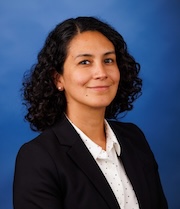
“But we forget that politicians have many ways to fight back. Part of the model of accountability for corruption needs to include the communication and strategies of political actors used to defend against the corruption accusation,” said Sofia Vera, assistant professor of political science at the University of Kansas.
This led to her new article, titled “Blame Avoidance and Corruption: How Politicians’ Denials Shape Citizen Perceptions and Political Accountability.” Her study investigates how public denials by politicians accused of corruption influence electoral accountability and why positive and negative partisanship shapes voter reactions. The article appears in Governance.
“Once citizens become informed about a corruption accusation or criminal indictment that a politician is involved in, they have to weigh in,” said Vera, who co-wrote the article with Nara Pavão of the Universidade Federal de Pernambuco, Brazil.
“They have to prioritize issues like, ‘Do I care as a citizen about these politicians’ integrity? Or do I care more about the other issues like how they align with my policy positions and partisan identity?’”
To study this concept, the professors created an online survey experiment conducted in Brazil. It introduced vignettes to test the effectiveness of strategies used by politicians accused of corruption. These included responding to allegations using offensive, defensive or neutral tactics.
“The defensive denial was focusing on your own track record of integrity. The offensive was more like the ‘witch hunt’ type of strategy, where you are attacking the judicial institutions, claiming you are the victim of an orchestrated political plot. Then the neutral was reducing the value of the incriminating evidence — like there is not enough evidence to matter,” Vera said.
While all three approaches proved effective, they found denials significantly enhanced the accused politician’s public image and electoral prospects, particularly among partisan respondents. Notably, negative partisans were especially responsive to these defense strategies.
“The limitation with blame avoidance strategies in the literature is that they usually just study excuses,” she said.
“Maybe some of the actions fell short and didn’t fully address a problem or they are excusing themselves or justifying themselves. But they don’t study denials. And we think denials are more likely in the area of corruption because you have to admit some level of culpability if you want to excuse or justify something. But a denial completely absolves you of culpability.”
Vera notes how contemporary politicians are increasingly using more aggressive tactics of attacking their opponents and demonizing the opposition. They also are condemning institutions to reduce the trust that the public has on democratic pillars, elections and judicial conventions.
“In this era, populist leaders tend to win elections. So that would suggest there is a tendency for the public to be swayed more by direct attacks and negative messages that distract the attention from your own issues,” she said.
Although the survey was conducted in Brazil — a country with a long history of corruption — Vera believes U.S. citizens might respond analogously.
“When we began designing this experiment, we were thinking primarily about Brazil,” she said. “But I can see the many parallels between Brazilian and American politics lately, and both populations are extremely polarized. People talk about the ‘Latin Americanization’ of American politics because of the type of leaders we are getting in the U.S.”
One of the most effective ways in which politicians have laid a foundation for having the public accept blame avoidance strategies is by demonizing the press.
“There is a lot of distrust in the media. There is also so much more polarization — people tend to listen to the news that confirms their political biases. So if they think their guy is the victim of a witch hunt, then they are going to reaffirm that once and again through the sources they use for political news, which tends to be social media increasingly,” she said.
A KU faculty member since 2020, Vera focuses her research on political behavior in comparative perspective as well as partisan elections and representation. The Peruvian native has written extensively about such topics, including last year’s article “Democratic elections and anti-immigration attitudes” for the Journal of Peace Research.
“In Latin America, we have seen so many politicians who were involved in very blatant cases of corruption. We have seen many leaders who are very charismatic and that, despite their wrongdoings, people still support them until the end. The big question is: Why does it seem like corruption doesn’t matter?” Vera asked.
“There are many things you can get wrong as a candidate or incumbent, but corruption should really be the ultimate wrongdoing that everyone is going to evaluate negatively. That should be the easiest thing you ask from citizens.”