Strategies for fixing out-of-control tipping practices revealed in new article
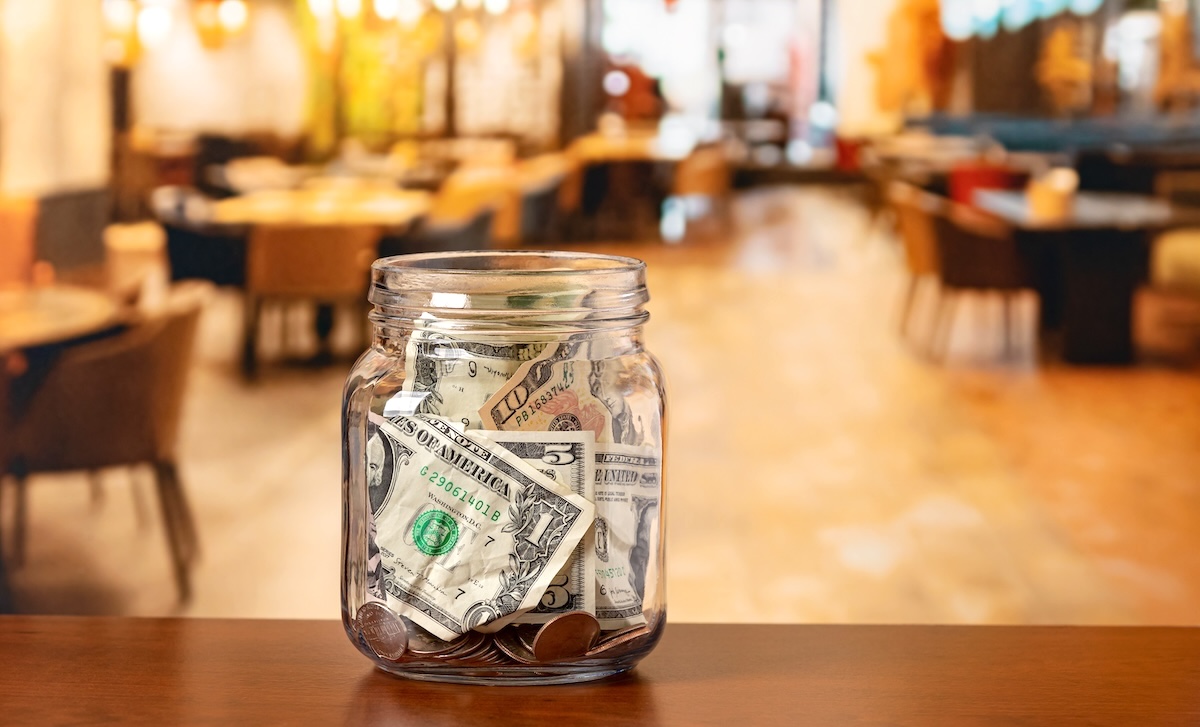
LAWRENCE — The United States is widely considered to have the most ingrained —and expensive — tipping culture in the world. And according to new research, it’s gotten progressively more problematic over the last few years.
“Theoretically, when you tip for a service, your tip should be proportional to the service you receive,” said Rob Waiser, assistant professor of marketing at the University of Kansas. “But that’s not really what it is anymore.”
In his new article titled “When Tipping Becomes a Customer Experience Problem,” Waiser notes how a social process once confined to hospitality is now appearing in unexpected places such as airlines, medical offices and auto repair shops. The research examines how tipping, when designed thoughtfully, can reinforce customer centricity rather than undermine it. The article is published in the Harvard Business Review.

“Every now and then I’ll use a self-checkout and it prompts me for a tip. So … why am I tipping? Who exactly am I tipping?” said Waiser, who co-wrote the piece with Mark Bender of the University of Tampa, Marco Bertini of Universitat Ramon Llull in Barcelona and Oded Koenigsberg of London Business School.
According to the latest annual survey by Bankrate, 41% of Americans believe “tipping culture has gotten out of control,” up from 30% in 2023. The pandemic may be what set this trend in motion.
“During COVID, most of us developed a much greater appreciation for people like delivery drivers, which we took for granted for a long time until none of us could leave the house,” he said. “Then all of a sudden they were essential workers. That led to different tipping habits.”
The other key factor he cites is the advent of newer and more ubiquitous technologies.
“In taxis, for example, you used to tip cash because you paid in cash,” he said. “Now you pay with a card. There’s some data from New York City showing that the average tip when people went from cash to cards more than doubled. People used to tip around 10% with cash. Now you’re faced with a screen that’s prompting you to tip 20% or more.”
This has led to the creation of two key concepts: tip creep and tipflation. Tip creep is being asked for tips in places where you previously weren’t asked. Tipflation is how the expected amount keeps expanding.
“As marketers, we teach our students the idea of customer centricity,” said Waiser, a Toronto native who’s been at KU for three years.
“You win in the market by doing the best job of delivering what customers want or need from you. When it comes to tipping, businesses need to go back to fundamentals.”
His team came up with three conditions businesses should weigh when deciding to implement, refine or discontinue a tipping program:
- Distinctiveness: Customers should not be expected to tip for services that are essential to a purchase. They need to clearly recognize which part of their experience comes from discretionary service.
- Visibility: The discretionary service being performed must be observable to the customer.
- Proportionality: Customers should have the freedom to reward workers based on their perception of service quality.
“Regarding distinctiveness, I’m tipping for the discretionary service that could be better or worse,” he said. “For instance, there was a video game company that asked people who bought their game to tip the programmers. I bought the product. I paid for the product. What’s the discretionary thing that necessitates a tip?”
When it comes to visibility, he points to auto mechanics as a recent tipping absurdity.
“I can’t see the quality of your service. I didn’t watch you do it. I don’t know if you’ve done a good job or not. So that’s a setting where it doesn’t make sense to tip,” he said.
Proportionality leads to problems involving worker incentive. If everyone is expected to tip 20%, then quality becomes less of a motivator for those performing a service.
“One of my coauthors came up with a great observation: Tipping is no longer a reward for good service; it’s a way for businesses to monetize empathy,” he said.
Among the concrete fixes Waiser’s team suggests are getting rid of the practice of flipping the screen around and forcing individuals to publicly choose a tip. He also advises against tip pooling, which prevents consumers from directly observing the job being provided.
“We also came up with the idea of tying ratings and tips together. People are used to rating services and products all the time. This could help give people direction by, for instance, rating a server from one star to five stars. A business could say, ‘We recommend that five-star service is worth a 22% tip. For three-star service, we recommend a 15% tip,’” Waiser said.
“Part of the main stress for consumers is not really knowing what the right amount is to tip. These are all ways to make our common interactions less awkward.”