Pandemic, election crises mark ‘critical events’ in declining democratic accountability standards, governance scholar writes
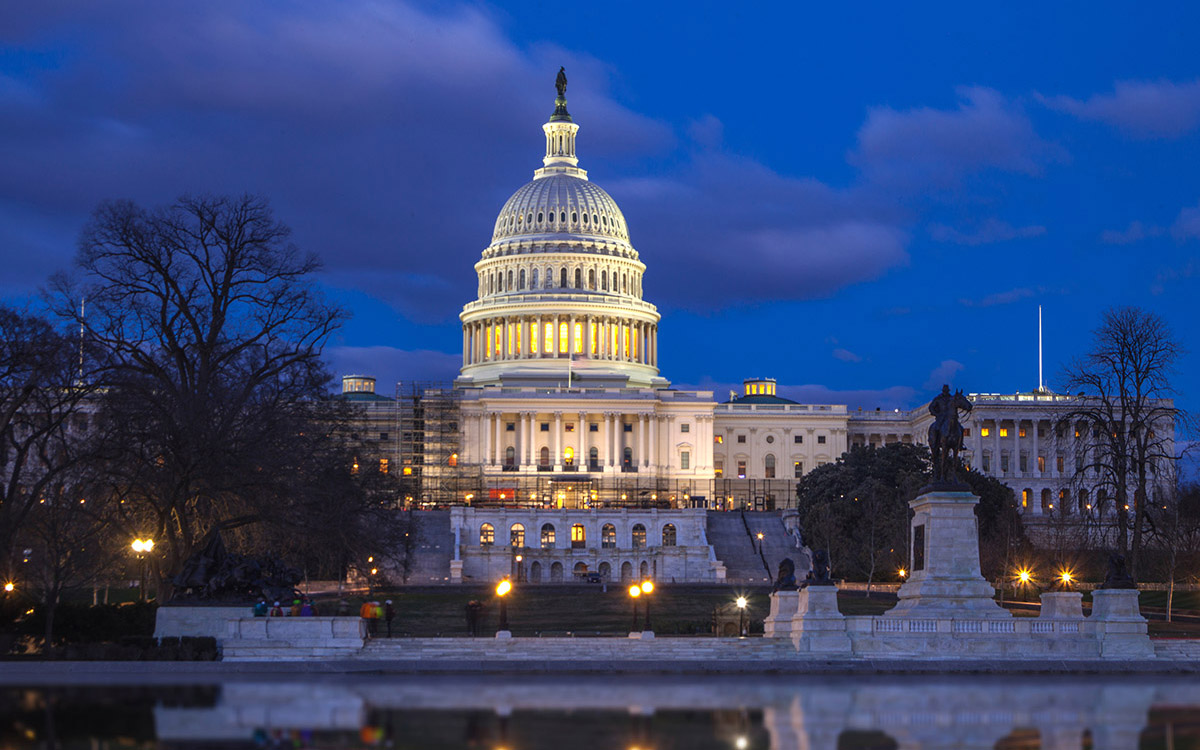
LAWRENCE — In the United States, the years 2020 and early 2021 were marked by two major historical events: the politicization of the public health response to the COVID-19 pandemic and the perpetuation of false claims about the integrity of U.S. elections, leading to the riot on the U.S. Capitol on Jan. 6, 2021.
These twin crises were “critical events” leading to the transgression or rupture of specific democratic accountability standards, according to Christopher Koliba, Edwin O. Steene Distinguished Professor of Public Affairs & Administration at KU.
Koliba recently outlined these issues in an analysis published in the peer-reviewed journal Perspectives on Public Management and Governance.
“To make meaning out of current political events, we need better empirical standards for determining when democratic norms are upheld and when they are transgressed,” Koliba said. “We all remember the pandemic and election crises of 2020 and 2021. These were critical historical events that disrupted society and democratic institutions.
“The pandemic would have been disruptive no matter what, but the way it was immediately politicized exacerbated things and quickly turned the crisis into a matter of individual rights and intolerance of others, while the president’s framing of a narrative that the election would be stolen fully five months before a single vote was cast signaled a serious disruption from the norms of constitutional checks and balances and the legal procession of free and fair elections.”
Democratic benchmarks have been expressed in Koliba’s prior published work drawing on legal and normative features of liberal democracies that he distilled down to seven accountability standards:
- The centrality of citizen authority.
- Checks on the concentration of power.
- Protection and expansion of individual rights.
- The practice of tolerance of differences.
- Forbearance toward democratic institutions.
- Appeals to reason and truth claims.
- The importance of institutional continuity and professional discretion in the operations of democratic governments.
In his new scholarly analysis, Koliba applied these standards of accountability to detailed timelines of events that unfolded around the two crises. The author used critical event analysis, a method often used by historians to understand how historical events lead to substantive ruptures in the stability of states and societies.
Each crisis ruptured democratic standards, according to Koliba, with both cases transgressing three standards in particular: those relating to reason and truthfulness, forbearance toward democratic institutions and professional discretion.
Both crises transgressed the truthfulness standard of liberal democracy, Koliba wrote, as President Donald Trump spread falsehoods regarding the origins of COVID-19, the effectiveness of unscientific treatments and the ways to mitigate and prevent its spread. The president also made repeated claims of election fraud before and after the election, including filing 82 lawsuits, 78 of which were rejected by the courts, ultimately resulting in a net gain of only 486 additional votes for the incumbent.
Both crises also undermined the professional discretion of government professionals and the legitimacy of public health and elections administration institutions of the nation, according to the KU author.
“As a public administration scholar, this is concerning. If a CEO of a manufacturing company said ‘don’t buy our product,’ they’d be fired in a minute,” Koliba said. “But the president undermined the very systems he was leading and entrusting to provide valuable public services: public health and free and fair elections. That he was and is able to do so is a profound shift from precedence and, I argue, a breakdown in accountability.”
By reconstructing the timelines of the two crises and studying instances of when the standards of democracy were transgressed, Koliba said he hoped the public may reach a better understanding of when and why transgressions of democratic standards are happening.
Koliba noted the legacy of both crises:
- In recent months, Trump has made public comments about the nationalization of the electoral system, bolstering the narrative that the current “electoral system is illegitimate,” according to Koliba.
- Reflecting on the lasting impacts to public health policy, Koliba pointed to recent decisions to pull back on the scope of recommended childhood vaccines from a Centers for Disease Control and Prevention (CDC) advisory panel of political appointees, which suggests that the skepticism toward the professional and scientific consensus on matters of public health continues.
“The president’s efforts to govern through executive orders, censor speech, extend federal policing authorities and require new hires to federal service to take loyalty tests all appear to offer new examples of the erosion of democratic standards,” the KU author said.
“We need to continue to study the principles of democracy, how they are applied and how they may be violated,” said Koliba, who is director of KU’s Center for Democratic Governance. “By documenting democratic backsliding through a detailed study of critical events and clear benchmarks, I believe we can harness the tools of social science to ensure that we don’t erode democratic standards to the point of losing them.”
He said he hoped the analysis would be widely accepted by people across political divides.
“Essentially the democratic ideals we hold in common are what can and should be binding us together as a democratic society.”