KU Engineering researcher receives NSF CAREER award for work on reliable healthcare AI
LAWRENCE — Artificial intelligence is becoming part of everyday life, from search engines to classrooms. But in healthcare, where decisions affect human lives, the stakes are much higher.
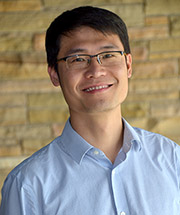
To help doctors safely trust these tools, Zijun Yao, assistant professor of electrical engineering & computer science at the University of Kansas, is developing a more reliable framework for medical AI.
His work has earned a National Science Foundation CAREER award, one of the nation’s top honors for early-career faculty. Yao’s project tackles a major hurdle in healthcare technology: teaching AI to understand a patient’s full medical history without losing sight of human clinical judgment.
“Every time you visit a doctor, a new chapter is added to your medical record,” Yao said. “Over a lifetime, those chapters form a highly complex story about your health. My work teaches AI how to read and understand that complete story.”
Current AI systems often struggle with this complexity. They may analyze isolated data points from a single visit but miss the broader timeline, occasionally producing recommendations that conflict with established medical knowledge.
“To truly understand someone, you must follow the timeline from year to year but also see how events within a single chapter connect,” Yao said. “Our tools aim to help doctors recognize hidden patterns, anticipate health issues before they happen and provide truly personalized care.”
Importantly, Yao emphasizes that the goal is never to replace human expertise.
“We want to give doctors a powerful, dependable assistant that can sift through overwhelming amounts of information and highlight the exact details needed to make the best decisions,” he said. “This buys precious time to intervene, making healthcare far more proactive.”
A major focus of the project is ensuring the AI remains stable when data is messy, incomplete or unexpected.
“In a standard computer application, a small error is merely an inconvenience,” Yao said. “In medicine, an unreliable prediction directly impacts a real person’s health. For me, responsible AI means being transparent about how conclusions are reached, keeping doctors firmly in the loop and proving a system behaves predictably long before it ever reaches a patient.”
To achieve this, Yao’s team is building mathematical safeguards into deep learning models to lower the risk of producing false information. The project strengthens AI dependability on three fronts: improving how systems represent a patient’s medical history, aligning algorithmic reasoning with established medical principles and hardening the models against unexpected vulnerabilities in real-world data.
Supported by CAREER funding, Yao plans to move his research from theory to real clinical settings, partnering with medical collaborators to test systems on real-world challenges, such as disease prognosis, personalized treatment recommendations and long-term outcome prediction.
“The most meaningful milestone for me will be the moment a computational method proves to be genuinely useful at the patient’s bedside,” he said.
For Yao, the award is a testament to a collaborative culture at KU and the School of Engineering that encourages faculty to take on big, ambitious challenges.
“Meaningful research does not happen in isolation,” Yao said. “It depends on supportive colleagues, talented students and an institution that encourages its faculty to tackle complex, high-impact problems. KU also provides close working relationships with our medical center and clinical partners, allowing fundamental computer science research to connect directly to patient care.”
Mentoring is a deeply personal mission for Yao and is a key part of the CAREER award’s focus on education. His research supports graduate students working at the forefront of AI and healthcare, helps undergraduates aim for major research awards and reaches younger students and teachers across Kansas through summer camps and educational programs.
“Preparing the next generation is vital because the people who build healthcare technology today will determine how safe and fair it becomes tomorrow,” Yao said. “I want my students to graduate with much more than just technical skills. I want them to understand the profound responsibility of applying AI to human lives, to prioritize system reliability and to recognize their capacity to solve problems that truly matter.”
It is this deeper sense of responsibility that ultimately led Yao to this field of research.
“I was drawn to this area because it brings together the technical challenge of building intelligent systems and the profound opportunity to do work that directly helps people,” he said. “The most exciting future is one where clinicians have a reliable, transparent partner that helps them see more clearly and act sooner. Reaching that future depends on building these systems carefully, and that is exactly what this award makes possible.”