KU Biodiversity Institute names Christina Lutz lead preparator and lab manager in vertebrate paleontology
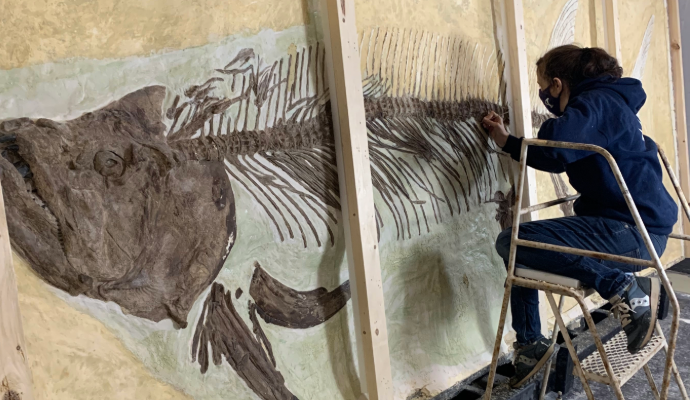
LAWRENCE — The Biodiversity Institute and Natural History Museum at the University of Kansas has named Christina Lutz as the vertebrate paleontology lead preparator and lab manager. In her role, Lutz will support the research and educational mission of the Vertebrate Paleontology division by preparing fossil material collected from the field and creating high-quality molds and casts of vertebrate fossils for use in research, teaching and public exhibits.
"At KU, my goal is to maintain strong archival standards while fostering an inclusive, hands-on environment where students and volunteers can learn, contribute and thrive," Lutz said.
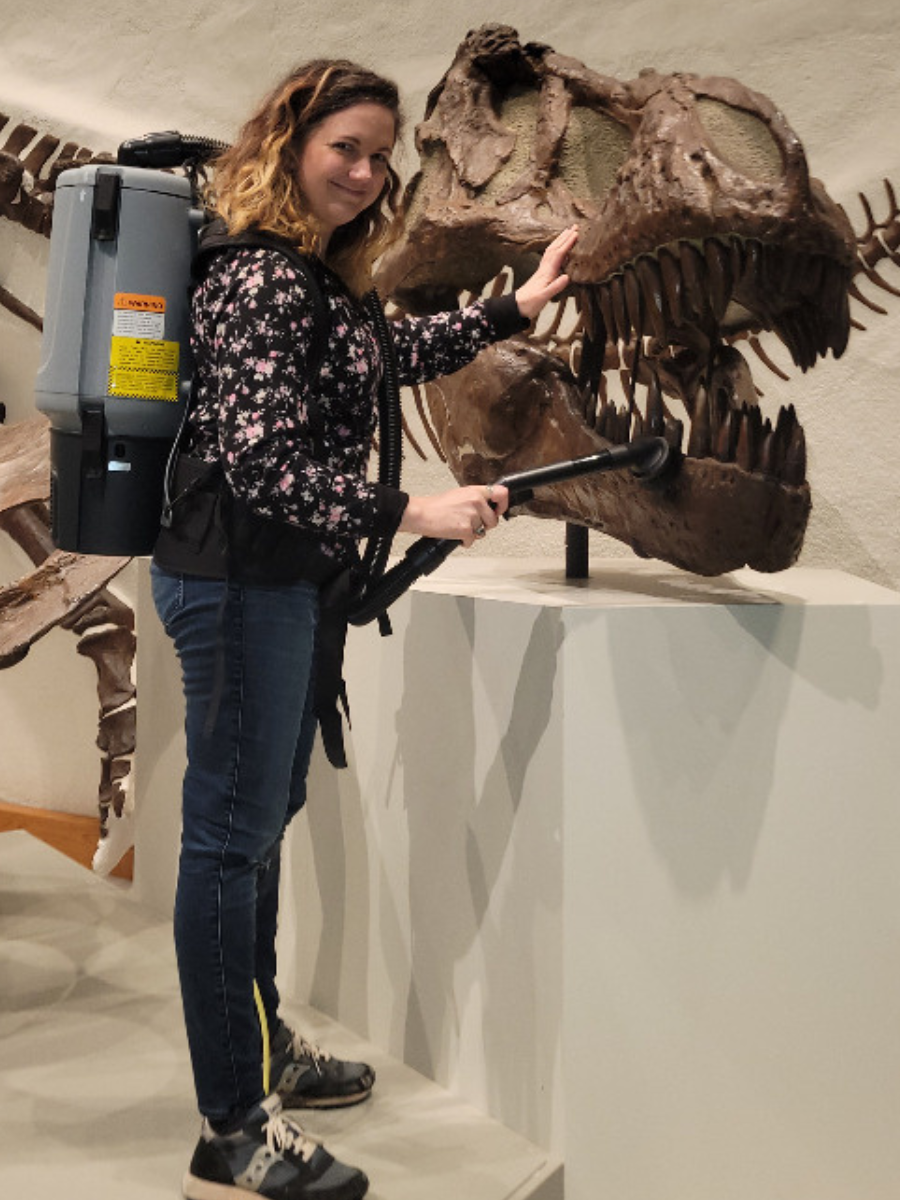
Lutz earned a Bachelor of Fine Arts degree from Tufts University and is a recently elected board member of the Association for Materials and Methods in Paleontology. She brings more than a decade of professional experience in fossil preparation, including work at the Yale Peabody Museum and the La Brea Tar Pits and Museum.
Her work spans multiple continents and includes excavations of Triassic fossils at Petrified Forest National Park in Arizona; fieldwork in Santa Elena, Ecuador, uncovering skeletal remains of extinct giant ground sloths; and most recently, preparing specimens on the Arabian Peninsula for display at the new Natural History Museum Abu Dhabi.
“Christina’s broad yet thorough background in fossil preparation, in terms of time, taxa and geography, complements the research and education mission of the KU Division of Vertebrate Paleontology. We’re excited to be able to add her to our team,” said Chris Beard, senior curator of vertebrate paleontology at the Biodiversity Institute and Foundation Distinguished Professor of Ecology & Evolutionary Biology at KU.
The KU Division of Vertebrate Paleontology, housed within the Biodiversity Institute and Natural History Museum, is consistently ranked by U.S. News & World Report among the top public university paleontology programs in the nation. The division maintains a research collection of approximately 160,000 fossil vertebrate specimens and associated data, with current research focused on early Cenozoic mammals from both domestic and international sites.
"I’m especially excited to work with KU students in a preparation lab environment that is welcoming and collaborative,” Lutz said. "Supporting students as they develop technical skills while learning the importance of best practices and careful documentation is central to how I approach preparation and mentorship."
The Biodiversity Institute and Natural History Museum is an internationally recognized center for research and graduate student education in evolutionary biology, systematics and biodiversity informatics, with curated research collections of more than 11 million plant, animal and fossil specimens and 2 million cultural artifacts. It is one of 11 designated research centers that fall under the KU Office of Research and is among the top 30 largest natural history museums in the world.